Kawaii Asian Food: Eat Happy! Delivers Pure Joy
In a digital landscape often dominated by sleek minimalism and stark corporate typography, there is a refreshing shift toward designs that prioritize warmth and personality. For creatives looking to inject a sense of nostalgia and cheer into their work, the Kawaii Asian Food: Eat Happy! graphic offers a unique solution. This isn't just a standard display font; it is a comprehensive illustration asset that functions with the versatility of a premium font. It captures the essence of the Japanese "kawaii" culture—cute, rounded, and endearing—while focusing on the universal love for Asian cuisine. From steaming bowls of ramen to adorable boba tea, the visual language of this asset is designed to evoke an immediate emotional response, making it a powerful tool for anyone involved in brand identity or content creation.
The Anatomy of Adorable: Visual Characteristics and Style
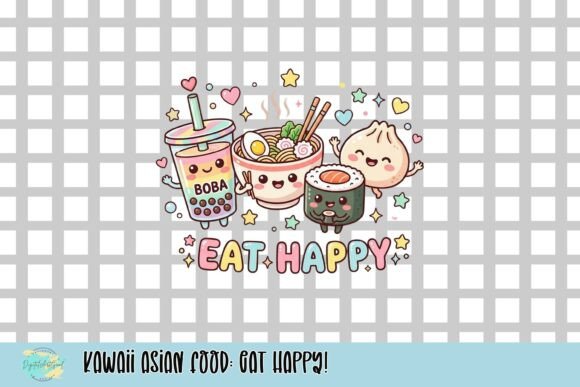
When we talk about modern typography, we are often discussing how letterforms interact with imagery. Kawaii Asian Food: Eat Happy! blurs the line between text and illustration. The visual style relies on soft, rounded edges and vibrant, saturated colors that mimic the look of high-end digital illustration or plush toys. Unlike a traditional sans serif font that prioritizes neutrality, or a serif font that demands authority, this style relies on character. The "personality" of this graphic set is playful and approachable.
The design elements—dumplings with tiny smiles, sushi rolls with sparkling eyes—are rendered in a high-resolution PNG format. This ensures that the lines remain crisp whether you are scaling them down for a small icon or blowing them up for a poster. For designers, this is crucial. It eliminates the pixelation issues often associated with lower-quality design assets. The style bridges the gap between handwritten font aesthetics and vector art, offering a texture that feels organic and crafted rather than mass-produced. It works beautifully alongside a clean script font for menus or invitations, providing a visual anchor that is instantly recognizable.
Strategic Applications: From Branding to Merchandise
Understanding where Kawaii Asian Food: Eat Happy! fits best requires a look at your project's goals. This asset is not merely decorative; it is functional across various industries.
1. Print-on-Demand and Merchandise:
If you operate in the print-on-demand space, this graphic is a goldmine. It translates exceptionally well to physical products. Think about the tactile nature of a tote bag or a ceramic mug; the rounded, friendly shapes of the kawaii food items hold up well on curved surfaces. For packaging design, particularly for snack brands, tea shops, or bakeries, this style immediately signals to the customer that the product inside is fun and enjoyable.
2. Digital Marketing and Social Media:
In the realm of social media graphics, stopping the scroll is the primary objective. The vibrant colors and cute character design of Kawaii Asian Food: Eat Happy! are algorithm-friendly. They generate engagement because they are visually distinct from the standard stock photography cluttering feeds. Use these assets to create stickers for Instagram Stories, highlight covers, or eye-catching headers for blog posts about food, travel, or lifestyle.
3. Editorial and Web Design:
For bloggers and publishers, visual hierarchy is key. While you wouldn't use a dense illustration for body text, these assets serve as perfect "break" points in long-form articles. They can act as custom bullet points or section dividers in web design, guiding the reader's eye down the page. When paired with a legible commercial font for your body copy, the kawaii elements add a layer of delight without compromising readability.
Influence on Brand Perception and Audience Engagement
The psychological impact of using a style like Kawaii Asian Food: Eat Happy! is significant. In branding, visual cues dictate how a customer feels about a business. By utilizing this specific aesthetic, you are positioning your brand as approachable, friendly, and perhaps a bit nostalgic. This is particularly effective for businesses targeting the "kidult" market—adults who enjoy playful, youthful aesthetics.
Consistency is another pillar of professional design. When you integrate these assets into your logo design or marketing collateral, you create a cohesive visual thread. If your brand voice is conversational and warm, a stark, cold typeface creates dissonance. Conversely, the cheerful nature of Kawaii Asian Food: Eat Happy! aligns perfectly with a brand that wants to spread happiness. It enhances audience engagement because it feels human and relatable, rather than corporate and distant.
Practical Integration: Typography and Workflow
Integrating a graphic-heavy asset like this into a professional workflow requires some strategic planning regarding font pairing. Because the kawaii illustrations are dense and detailed, they pair best with simpler typefaces. A geometric sans serif font often works best for headlines accompanying these graphics, allowing the art to take center stage without visual competition.
When evaluating the fit of Kawaii Asian Food: Eat Happy! for your project, consider the medium. Because the files are high-resolution PNGs with transparency, they are drag-and-drop ready. This saves significant production time for small business owners who may not have advanced skills in Adobe Illustrator. However, always test the scaling. While high-res files are flexible, ensuring the details of a tiny dumpling remain visible on a business card is a necessary step in the proofing process.
Finally, regarding commercial licensing: always verify that the asset covers your intended use, whether for personal stickers or mass-produced retail goods. The versatility of this creative font and illustration set makes it a valuable addition to any designer's library, offering a way to instantly humanize digital interfaces and physical products alike. By choosing Kawaii Asian Food: Eat Happy!, you aren't just selecting a graphic; you are choosing a mood—one that resonates with food lovers and design enthusiasts everywhere.